From “that meeting could have been an email” to “that meeting could have been a ChatGPT session.”
Recent Forrester survey summary:
AI is still stuck in “efficiency mode.” In many organizations, a technology organization leads AI efforts and is treated as a cost center. Those CIOs are incentivized to optimize for efficiency, not growth. The result is predictable: Tech-led AI strategies deliver productivity improvements, but not transformation. Equally concerning is that technology and AI executives tell us their business partners can’t articulate what they want from AI beyond saving money. That leadership gap bleeds over into the measurement of AI value.
While most agree that AI boosts productivity, only 13% report positive EBITDA impact, and fewer than a third link AI contributions to P&L. Without financial accountability, AI becomes an endless pilot treadmill — producing activity without outcomes. To shift AI from incremental savings to strategic advantage, business leaders must step in, define value in P&L terms, and own the linkage between AI-driven productivity and financial performance.
But, oddly enough:
Our survey reveals a troubling disconnect: 48% of firms have already cut headcount due to AI
Something is weird in those findings: firing people is ROI.
There’s certainly much planning for shit-canning humans:
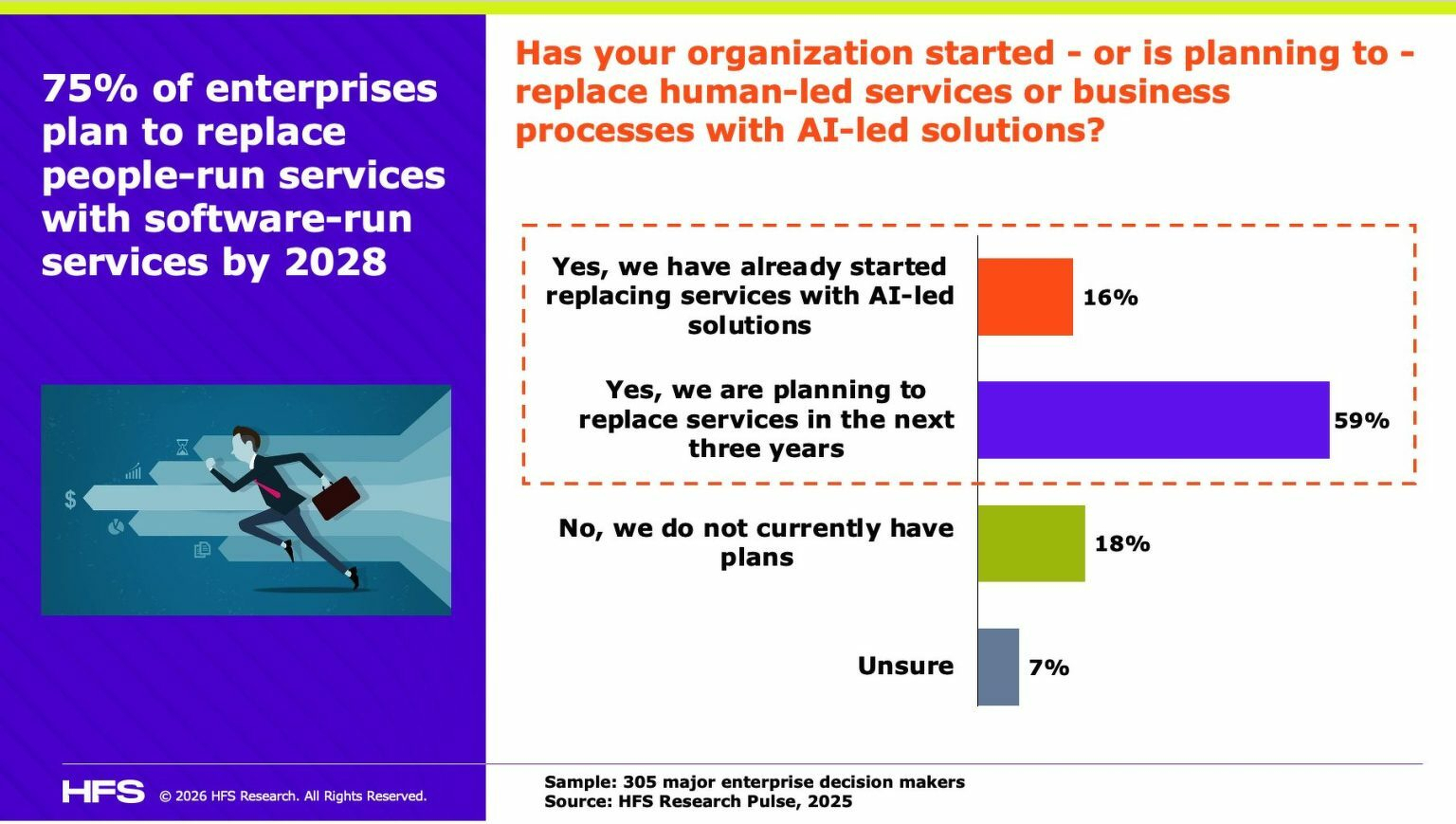
As I blogged last week, aside from programming (probably?), enterprise AI ROI hasn’t been living up to expectations in most surveys. Those numbers need to change in 2026.
Related, maybe the biggest bang for the buck (“transformation”) is eliminating bullshit meetings. After reading how bureaucracy is a form of self sabotage, I was thinking:
Meetings are the ultimate expression of bureaucracy. This, I’m pretty sure that the only, sure fire “culture change” you can achieve is “have less meetings.” We all know that, it seems, except the executives who are always scheduling meetings instead of just emailing or chatting. My hope is that they’ll start scheduling more meetings with AI to “whiteboard” on fifty revs of a deck. A knowledge worker can dream.
If half the room in The Big Meeting was fired because of that, you’re talking about more than those people. You’re talking about the teams of people who support each of those people. That story is kind of boring, but maybe that’s how you get to the civilization changing tool that Anthropic’s CEO is always bomb-throwing about
That’s a sort of “be careful what you wish for” angle, eh? Capitalism don’t care:
The goals of capital are not interested in the lofty ideals of magically improving your day-to-day workload, or enhancing your ability to think, be creative, enact your will — these are marketing promises made by those who benefit from eliminating your role when your coworker’s output increases.
Leave a Reply