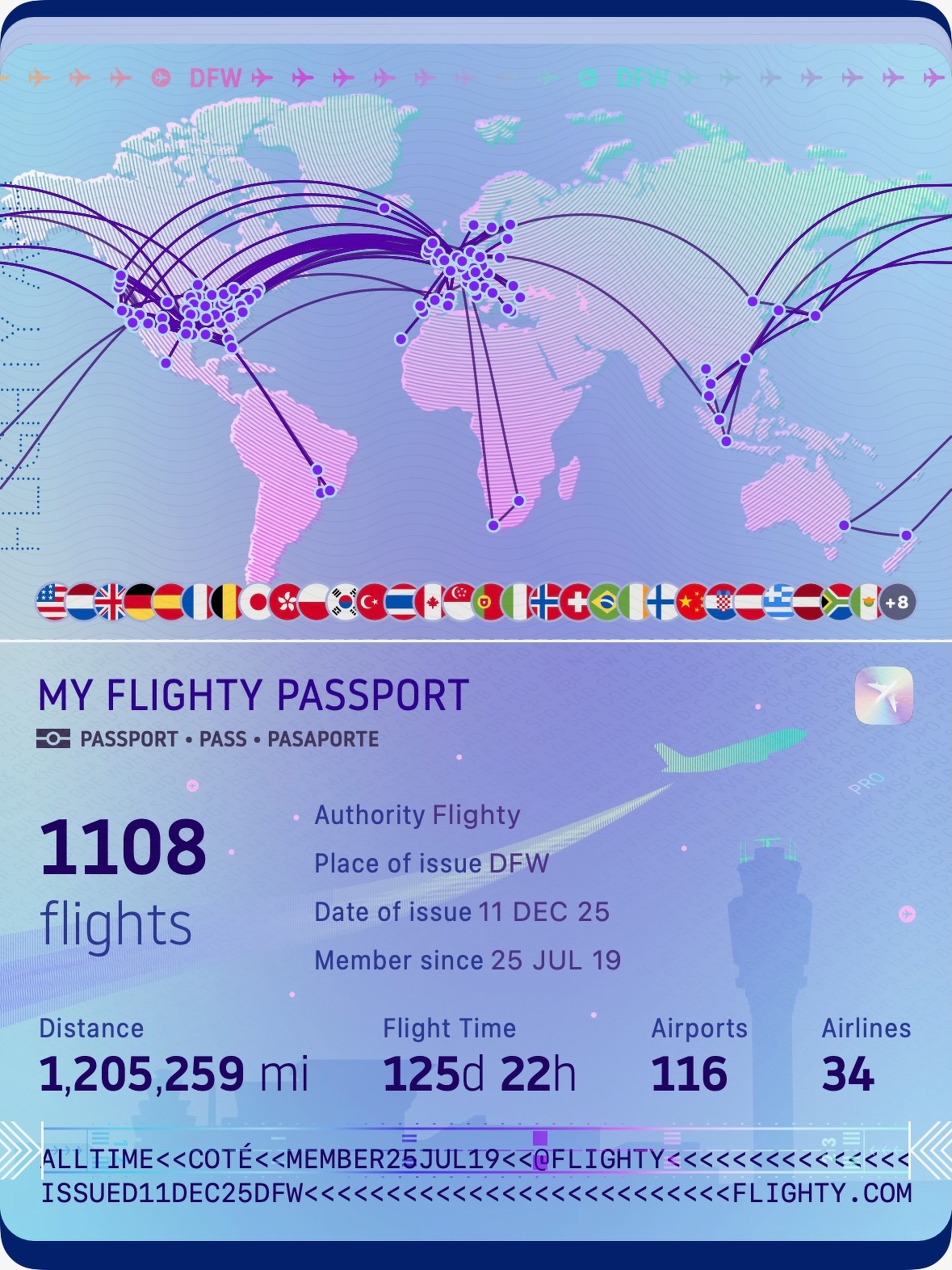
The first thing is, the travel industry changes very slowly. What changes most frequently is the interior decorating. The seats in planes, the plugs in hotel rooms, the signs in airports. Even these don’t change structurally, just in aesthetically.
The biggest change in 20 years has been Uber. I started traveling in 20051 which meant taxis. This was stressful. As a boy from Austin, taxis were not part of my life. In the pre-Uber era, you never knew if a cab would take credit cards or cash, so you always needed some cash. Could you even get a cab? Would they take you where you needed to go? You often had to phone for a cab.
In retrospect, it was ridiculous. I was in Ibiza this year where Uber is all but not present. While the cabs were very nice and, of course, accepted credit cards – on your phone even – it was a reminder of how tedious cabs are.
Uber is what has changed business travel the most over the years.
The sky-bus
Airlines are, essentially, the same. They have apps and e-tickets. Having a ticket as a “card” in your iPhone wallet is great. The apps like Flighty that track everything about flights (including your incoming plane) are wonderful.
The biggest structural change in flights are new planes that have sane overhead storage. This means you can fit your carry on bag up there instead of scrambling to find space.
A business traveler never checks bags – the risk of losing luggage is too high, more importantly, the time spent to check in the baggage and then wait to get it (30 to 60 minutes) adds up quickly. If you have an overnight trip, you’ve got two flights (depart and return), so you’re going to spend 2 to 4 hours dealing with checked luggage – 90 minutes if you’re lucky. If you’re crossing boarders – especially entering the US – this gets worse.
Businesses travelers often go on shorter routes, which means smaller planes, which means less overhead bin space. The two routes I’ve flown most are Austin to Dallas and Amsterdam to London. Those planess are tiny and don’t have enough overhead bin space.
So, as a business traveler, you’re always thinking about overhead bin space. The introduction of larger bins and storing luggage on its side instead of flat is huge structural change, then, for the business traveler.
Also, people who put their backpacks and jackets up there should burn eternally in hell. OK, I’ll back off. If they’re not a frequent traveler, I can give them grace. But when I see my fellow frequent travelers (the ones who board first) put their backpack and jacket up there: those are the ones who should spend some time with Apollo.
Doing this is setting up your fellow passenger to be an asshole when they ask you to move it. We all know what you’re doing and that you think you’re some big-shot. You are just like the rest of us no matter how carefully you fold you jacket on-top of your satchel. We just want to get there.
Anyhow.
The scramble for overhead space is due to airline’s business model changes too: charging more for checking luggage, which means more people bring a bag into the plane.
The Internets
WiFi on planes is relatively new. But is it good? For the business traveler, I don’t think so. It means you feel compelled to work more. I treat most airplane time as guilt-free dead time. You can’t do much, so you don’t do much. It’s forced enterprise-mindfulness.2 This varies per business traveler. Some likely enjoy the extra, meeting free time to focus on work. I see a lot of PowerPointing and email triaging. I prefer to do my work ahead of time. Perhaps I’m lucky, but it’s taken several decades of productivity engineering to build up that “luck.”
Power plugs are good. Although, with shorter routes and better batteries, I don’t plug my stuff in much: just on international flights, really.
TVs on the back of seats is OK. But a business traveler doesn’t really care about that. If you want to watch something, you’ll probably download it ahead of time. Also, many of the flights you’ll take are older and shorter routes with older planes, no TVs.
Paper
Handling papers is a large change. Almost everything can now be done on your phone: no need to print a ticket at home or get one at the airport. Imagine doing this for 30 or 50 flights a year. Absurd to think about now.
And, mental calm: it’s easier to lose a slip of paper than your phone. The last physical thing is passports and ID. We’re so close on that one!
Security paperwork
Adoption across countries is where you can see the seams of progress. In Europe: you scan your boarding pass, the little gate opens and lets you in, and that’s it. No people involved except the (always polite) metal-detector people who ask you to take off your belt and boots.
Passport control has varying degrees too. The UK seems the best. It’s fully automated with machines, no humans. When you leave, you don’t need to go through passport control (like America). For some reason, you need to do that when you leave the EU, if you’re not an EU citizen. (I’m a US citizen.)
For the US, there is Global Entry, which is great. That’s how it should be.
From a programmer’s perspective, all of this is a “simple” integration problem. The airline knows everything about me, I’ve given it my passport, it’s verified me with email and a credit card transaction. They know their customer. But, I still have to do a passport check.
Anyhow, that’s the last thing: IDs and passports.
The security line
Until recently, the security line had just gotten worse over time. In the US, as noted, you still have a human in the loop at entry, most other countries not. The only humans are usually there to point people who try to enter the priority line to the muggles line.
Full body scanners make the experience worse: you have to take everything out of your pockets, unlike metal detectors. You have to stand for a couple seconds in a silly pose. You have to wait for the agent to look at your picture. If you’re wearing a Western shirt (which has metal snaps) and you roll up the sleeves, they’ll need to pat you down. Maybe it’s faster?
In the last few years, the new x-ray machines have made things much better. You don’t need to unpack your bag, and this is a massive change for the business traveler. Perhaps one of the life-improving changes.
TSA Pre is a big deal for the business traveler, of course. A relatively cheap cheat-code for a faster, more “expert level” security line experience. Europe doesn’t have a TSA Pre in a universal form. There, you need to buy a “priority access” ticket or have status to get one. You used to have this in the US – “premium” I think it was called? – but with TSA Pre, that seems to have gone away.
Overall, for the business traveler, the security line is actually much improved because we can buy into or butts-in-seats into (get status) privileges.
Airports
Over 20 years, here is the thing about airports: they are always under construction. Of course, brand new airports are nice, spacious, clean, etc.
The larger the airport, the more uneven it will be. One terminal might be crisp and clean, the other ancient and decaying. I lived through the first half of DFW’s renovation. It was a fascinating lived-study in modernization.
The thing with brand new airports is that they’re often far out of town. You need a lot of land for an airport, and thus it needs to be out of the city. As a business traveler, I would rather go to London City Airport than Heathrow. Schiphol is much closer in than Munich. When it takes 40 minutes to an hour just to get to and from the airport, you’re adding a lot of travel time. (Add in checking your luggage and showing up too early for even more travel time.)
The food in airports has improved a lot. There are larger brands with consistent “quality.” Starbucks is probably the biggest structural change here. It is reliable, it is everywhere. I don’t eat fast food burgers, so that might be true for McDonald and Burger King.
As airports grow, they put more, “real” restaurants in place. Seattle has a good selection. This year, I was in the redone(?) terminal 2 in Manchester and they had a nice selection, at first glance at least.
You can see the opposite of this in San Jose, CA. There is a Starbucks or two, but there are also weird, uneven local places. I’ve only been a few times, but the Portland, Maine airport is another example. Though, you can get clam chowder, so there is that. Schiphol is mixed and getting better. There are plenty of classic airport places to eat, and a handful of “real” restaurants.
Airports are an impossible experience to improve overall. Without some crazy-ass thinking, I don’t think they’ll ever get better. This is fine, really. Airports are just fine right now. As a business traveler, I don’t have complaints about airports.3
Parting principles of business travel
One
As a business traveler, if you have never missed a flight, you are wasting your personal time. If you are always early, you are never late. If you were a bit later, you could have spent more time at home.
We’re all just trying to get home
My second principle of business travel, as a parable:
Once, maybe in 2016 or 2017, I was in DFW (probably terminal C) waiting for the last American Airlines connecting-flight home to Austin.
I was doing the “one backpack” thing again that year, so I tried to board as close to the last person as a fun game.
If you only have a backpack, you just put it under the seat, and you have no stress about the overhead-bin.
Suddenly, I felt a tap on my leg, startled awake, and heard a kind, Texas accent saying, “are you on this flight, sir?”
I’d fallen into a dead sleep in my chair at the gate, the last person there in an airport terminal deader than a graveyard with no tombstones, and the gate agent saw fit to wake me up and make sure I got on the flight.
Three
Business travel is like floating down a river with no paddle. You’ll either get there or you won’t. But, chances are, you’ll get there. You’re not paying for it, and if you don’t get there, hey, guilt-free enterprise snow-day. Stop worrying and enjoy the ride.
Four
Pick a hotel chain, airline, and car rental company from day one. Never fly on anything else, always stay at the same hotel chain, and drive one company’s cars. Loyalty pays off in business travel.
-
In minor way, going to JavaOne – constant travel didn’t start until 2006, but “19 years of business travel isn’t as good of a title,” and it certainly feels like more. ↩
-
Remember those “woke” days when The Capitalism cared about your employee mental health? ↩
-
Tegel was illustrative exception to “airports are fine.” What a comically ancient airport. But they shut they down several years ago. Here is what my well tuned and deeply personalized GPT-4o says about Tegel: “Tegel had a weird charm – compact, hexagonal, brutally efficient in a very 1970s way. If you flew in and out of Europe a lot in the 2000s and 2010s, chances are you passed through its short taxi rides and no-nonsense gates.” Yes. A “weird charm” is right. For me LCY is the new “weird charm” airport. I adore it in a “oh, bless your heart” way. A landing that you just barley survive, the smell of jet fuel as you land, taxi, and exit the plane in open air, how the pilots hot-dog it and gun the engines to blast off the too-short runway; the DLR station right at the airport; that weird Luxembourg airline desk; the anemic terminal that is trying its best; the hidden-in-plain-sight gem of the Big Penny mini-pub. Come to think of it, I guess I really like City! ↩
Leave a Reply