Tag: management
-
Exit, Voice, and Loyalty – “The Exit, Voice and Loyalty model states that members of an organization, whether a business, a nation or any other form of human grouping, have essentially two possible responses when they perceive that the organization is demonstrating a decrease in quality or benefit to the member: they can exit (withdraw…
-

The only people who don’t like metrics are the people being measured, or, developer productivity metrics quicksand
No links today, but this: Measuring Developer Productivity Once you suggest tracking an individual software developer’s performance, you get into big trouble with the thought leaders. This is, you know, pretty much a correct a response. McKinsey decided to have a go recently, giving us all a chance to think about “developer productivity” again. In…
-
Passing the anxiety parcel – “And in organisations there’s a phenomenon I sometimes call anxiety pass the parcel… The higher you are up in the hierarchy, the more likely it is that you are going to be indulged by those below you, in trying to pass on to them your anxiety…. You think you are…
-
In the face of volatility, CFOs—and their organizations—adapt – Belt-tightening watch. Lots of micromanagement and management by finance metrics ahead: “In the year ahead, CFOs plan to increase their focus on operational value drivers, management of KPIs, cash management, and capital structure. Other priorities have decreased in importance since Q3 2022.”
-

The eternal first inning of cloud
LEGACY SOFTWARE AT BANKS! That’s the topic of the talk my colleague and I are giving tomorrow. You can watch it for free, check it out. In addition to the talk, you’ll get a free copy of my book on managing legacy software, Escaping the Legacy Trap Here’s the slides we have so far, a…
-
28 Questions to Ask Your Boss in Your One-on-Ones – Good things to talk about in your meetings if you can’t think of anything else.
-
Change Fatigue In Digital Transformation: Where Has All The Value Gone? – Ways to keep the digital transformation alive: Contextualize business outcomes; Share the effort; Share the value; Conduct holistic load management; Target smaller, more frequent wins; Have a playbook; If you can, adjust incentives.
-
The Care and Feeding of Internal Developer Platforms – Five benefits of monitoring and managing internal developer platforms are noted: improved system performance, cost reduction, scalability, enhanced security, and improved feedback loops. Achieving these benefits entails securing deployment environments, establishing system baselines, setting up alerting rules, monitoring application performance, and automating processes.
-
Manage process before people – File under “must be nice…”
-
Cutting Costs by Cutting Waste – Instead of removing travel, R&D, etc. (which were thought to be required for your goals at once), focus on removing waste: Excessive risk management, analysis paralysis, unproductive meetings, imbalance of doing/watching, manual bureaucracy/toil.
-
Publishing Versus Orchestrating
Publishing Versus Orchestrating You can focus on short term delivery, or long term delivery. Do you follow the Twitter drama day-to-day, or just wait every week or two to see what happened? Do you write an article in a day or two, or write a 40 page PDF in a month, 120+ page book in…
-
Open Source usage survey
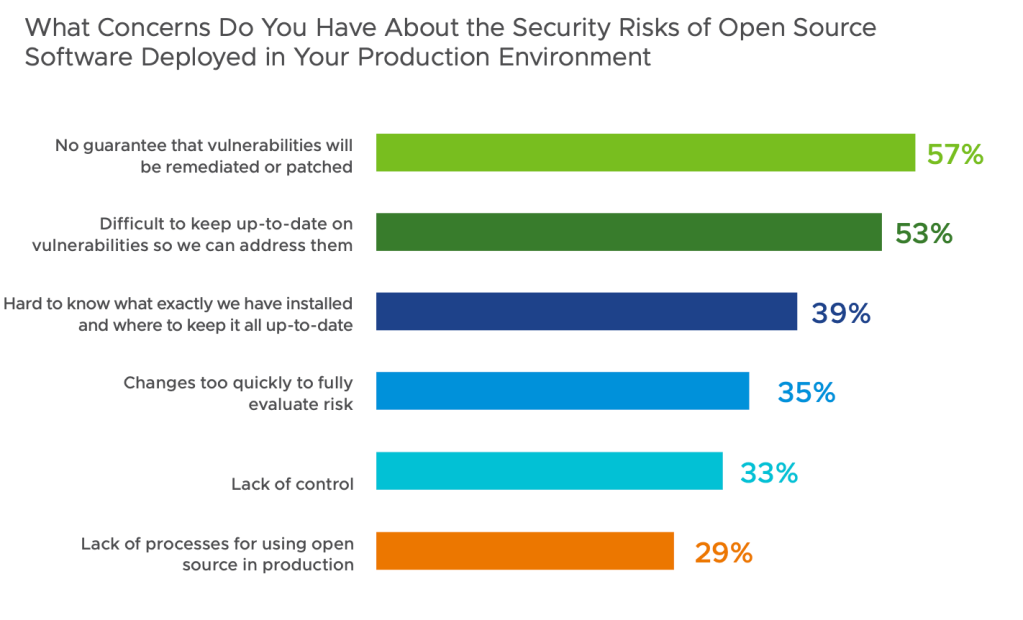
Some commentary on a recent survey commissioned from my work, VMware. Unsurprisingly, open source is used by almost everyone. When it comes to what I care about software development, open source is indispensable. In fact, it’s hard to imagine a developer who only uses closed source software, if not whole systems like kubernetes or Cloud…
-
Cynical Tactics for Change Management, Summer Hurry Up And Wait
Scroll to the bottom for my daughter’s favorite joke. Cynical Tactics for Change Management Most people don’t want to change. And why would they? What they’ve done to this point has been successful: they’re still here! Most people want stability in their day-to-day life, not the risks of trying new things all the time. So…
-

Coté’s Commonplace Book – Issue #71
Catch-up on four tiny videos, links, and wfh thinking. DevOps Loop, June 22, 2022 — devopsloop.io If you haven’t registered yet, you should attend one of the conferences I help put together, DevOps Loop. I’ve spent a lot of time with several of the speakers to think up talk topics – they’re ones I’m looking…
-

Coté’s Commonplace Book – Issue #51
Lots of original content this week, and unstructured tips on moderating a panel. Since it’s been two weeks, a passel of links too. We fear change This is a the first new talk I’ve done in awhile. It came out alright – I could do a lot more commentary on the existing organization change models,…
-
🗂 Link: Build Your Next-Generation Business Case Using A Lifecycle
Too often, leaders think of a business case as a one-time checklist item. But the best practice — which will increase your likelihood of success — is to think of a business case as a lifecycle, an iterative process that involves many stakeholders and steps. This lifecycle has five phases: Source: Build Your Next-Generation Business…
-
Link: CIO aan het woord: Sjoerd Blüm
The only assignment I have is to ensure that my teams get the job done. It is an illusion that I can or should be hooked one-on-one. My task is to put a point on the horizon where all those people move with their knowledge and skills and then ensure that there is an optimal…
-
Link: The Frozen Middle—Part Two: Thawing
The key, I found, was to agree on new objectives. First, we tackled the question of documentation. In the old model, QA’s job was to make sure that documentation was complete—that each required section of the official template had been filled in with enough information to satisfy our overseers. But in conversation, the head of…
-
Management, as practiced by a young IBM
Of course, there were countercurrents. Managers wanted to control activities. That impetus for control and management of potential risks led to the rise of bureaucracy, characterized by highly defined processes. Generations of executives micromanaged people all the way down the organization while fighting the growth of paperwork and “signoffs.” Such behavior also originated with Watson…
-
How to Run an Effective Networking Dinner
After the initial kibitzing, I recommend standing up and doing a small toast (if it’s a dinner meeting) and introduce a “topic.” For boards this can be an issue you’ve been debating as a management team that you don’t plan to cover off at the board meeting or you can even go a little bit…

You must be logged in to post a comment.