Tag: enterpriseai
-
One fix for elusive enterprise ROI: don’t measure it
“I am just very reluctant to spend a lot of energy quantifying it because it winds up wasting a lot of people’s time inside the institution when we actually need to get them to focus on doing things… as much as important and dramatic and exciting as this theme is, it takes a long time…
-
Can Claude for Financial Advisors Meet Practice-Specific Needs?
What exactly is in those markdown files? And how to ROI them: “Measure whether preparation and follow-up become faster after including advisor review and corrections, and whether savings support additional client capacity.” 🔗 Can Claude for Financial Advisors Meet Practice-Specific Needs?
-
How much AI runs on Kubernetes?
The problem appears when AI workloads enter that mature infrastructure. According to the figures Katie presented, 66% of organizations are already deploying AI workloads on Kubernetes. But only 7% are doing it daily, while 47% deploy them occasionally. Of the organizations using Kubernetes for AI, 23% have fully adopted the Kubernetes stack and 43% have…
-
One-third of AI-replaced workers will be rehired by 2029: Gartner
The consulting firm predicts that by 2029, 30% of employees laid off due to replacement by AI will need to be rehired, likely at a significantly higher cost. 🔗 One-third of AI-replaced workers will be rehired by 2029: Gartner
-
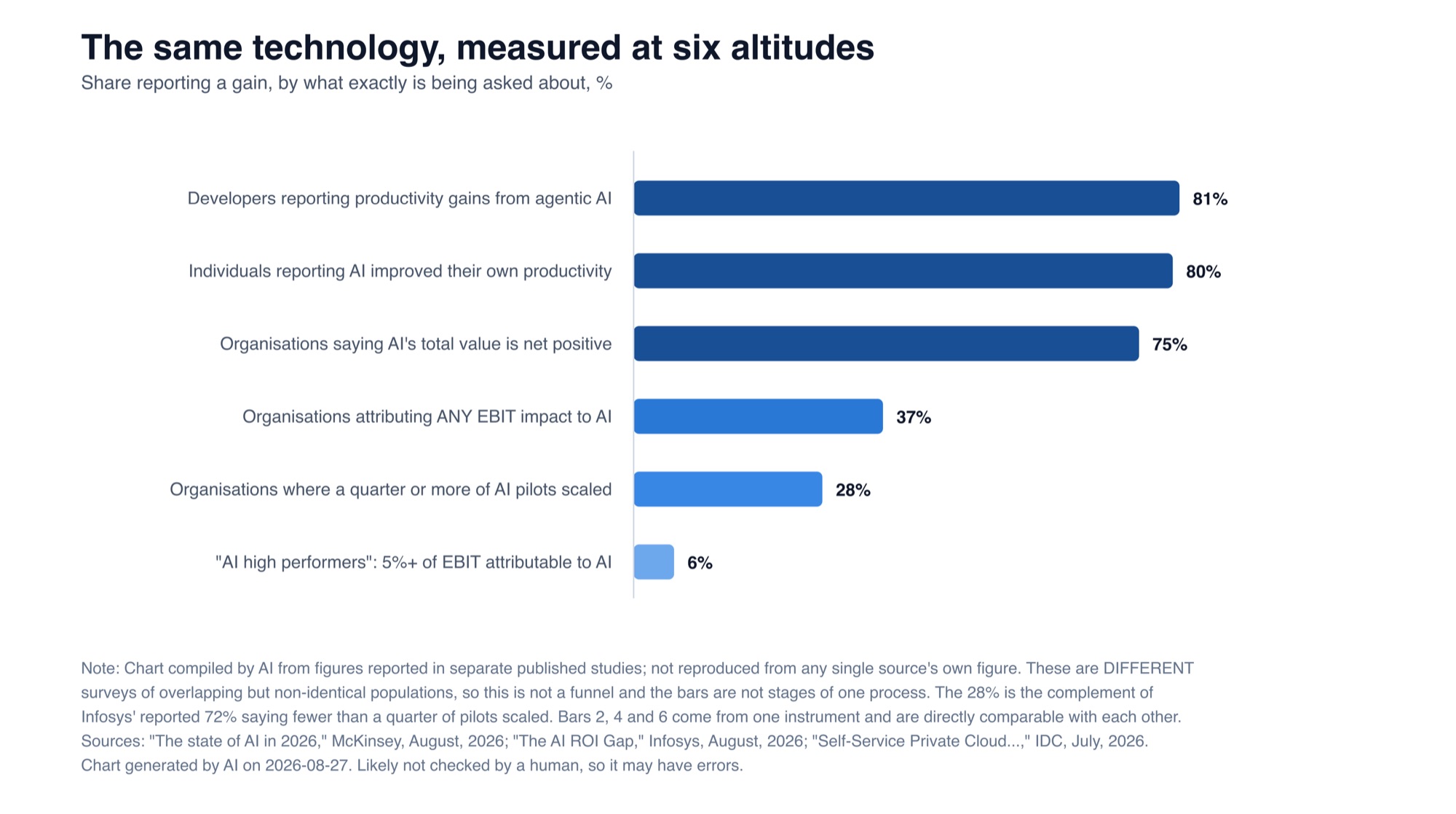
AI is valuable to the individual, less so to the organization
Ask an individual if AI made them more productive and about four in five say yes. Ask an organization if it moved EBIT and it’s fewer than two in five, and one in sixteen for anything you’d call real. A chart pulling three August surveys together, plus why the goal should be getting better at…
-
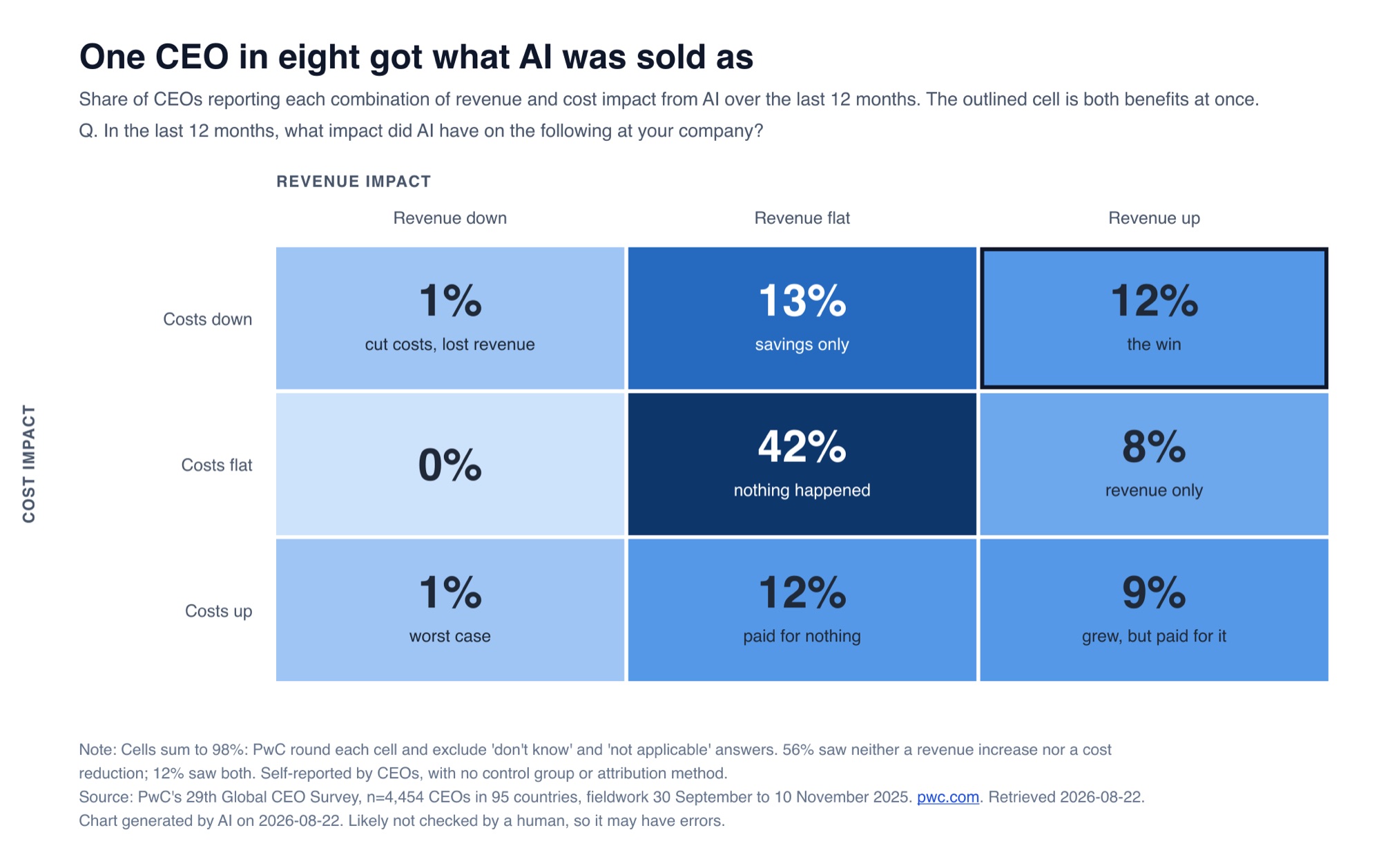
One CEO in eight got what AI was sold as, survey
PwC asked 4,454 CEOs what AI did to their revenue and costs over the last twelve months. The biggest single box on the matrix, at 42%, is the one where nothing moved. One in eight got both benefits at once, and 13% came out worse.
-
Your coding agent got the onboarding your developers never did
before you tune the tone of your next prompt, look at the AGENTS.md file your team wrote this quarter, and ask why the onboarding doc for your newest hire still doesn’t exist. 🔗 Your coding agent got the onboarding your developers never did
-
AI productivity gains aren’t translating to IT workload relief
Respondents said they have used AI in their work for an average of roughly 15 months. AI gains are materializing, but IT professionals say workload reductions aren’t keeping pace. Teams reported saving 2.7 to 3.3 hours weekly across core tasks, yet 71% of respondents said their overall workload has stayed the same or increased. Elusive Enterprise…
-

Relative to your interests, Friday
From: The adorable love story behind Wikipedia’s ‘high five’ photos ICYMI Original content published since last time. Shadow AI and Who Is Watching What the AI Bill Actually Looks Like People Actually Using It More Wastebook All things are possible, but this thing is more possible. AI Summaries I wanted to read these, but I…
-

Relative to your interests, Thursday
From Marc Weidenbaum, June 22, 2026. ICYMI Original content published since last time. Where the Developer Day Actually Goes Theoretic charts: Only three of the eight bands move. Source: The AI productivity gap by Bjorn Roche. Juniors spend more of the day on the one thing AI speeds up, so they gain more, not less.…
-

How people use AI in 2026: TV, homework, the DMV
Google looked at 15 million Gemini conversations and found people mostly asking about TV, homework, and government paperwork. Work is 13.5% of it, and almost none of that is trying to automate anything. Also: what the study leaves out, which is most of enterprise AI.
-

Relative to your interests, Tuesday
I have been on vacation for a little while, in Finland for the third time. Finland feels different than the other parts of Europe I have been to. Perhaps it’s because I spent my time there in rural Finland. But it also feels like most of Finland is rural. In that way, it feels a…
-
short feedback loops always works
Using short feedback loops to experiment and direct software development is always a good idea, especially with AI: What survives from Agile is the feedback logic. Short cycles still matter. Thin vertical slices still matter. Customer or stakeholder review still matters. Working software is still better than progress theater because agents can generate a lot…
-
Employee avoiding AI, doing manual work instead
A new global survey of 3,750 executives and employees across 14 countries, conducted by SAP subsidiary WalkMe for its fifth annual State of Digital Adoption report, finds that more 54% of workers bypassed their company’s AI tools in the past 30 days and completed the work manually instead. Another 33% haven’t used AI at all.…
-
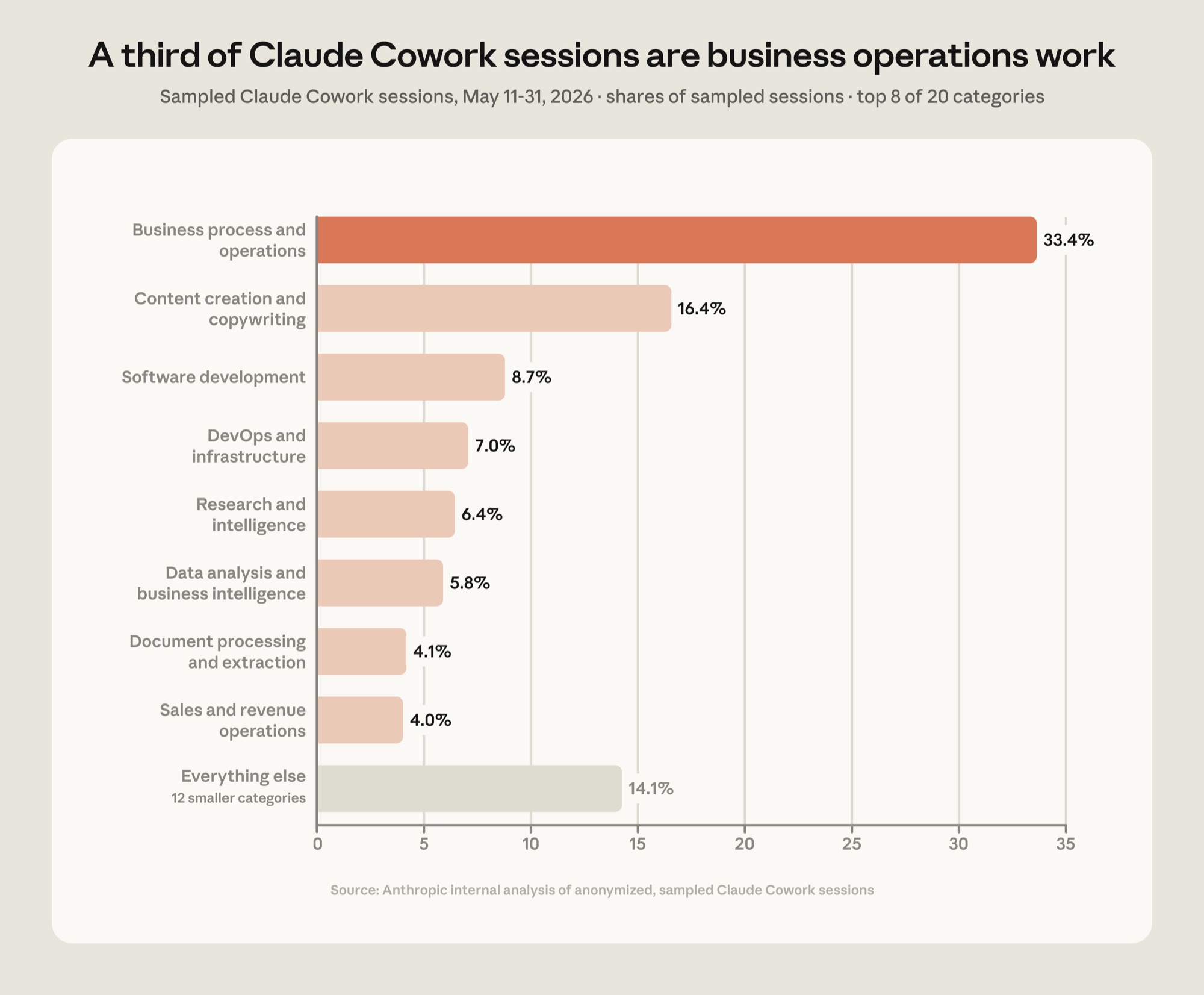
Normie AI Usage: Figures & Findings
Programmers are still the dominant users of UI and, thus, drive AI use cases. The much larger market are “normies,” people outside of the IT department who are doing “knowledge work” and other tasks in organizations. I asked the AI to pull together a list of what those activities are and the momentum around them.…
-
Enterprise Java apps are much more than just code, AI benchmarks don’t measure the Java SDLC enough
There’s countless dependencies in other frameworks and libraries, plus the build pipeline and even production platform are part of the app. Enterprise Java applications frequently span hundreds or thousands of modules connected through Maven or Gradle builds, Spring dependency injection, Jakarta EE services, annotation processors, generated code, legacy XML configuration, container orchestration, proprietary build plugins,…
-
How NatWest is using AI
The NatWest CIO goes over how they’re using AI with some use cases. Some: “Today at NatWest, over 40% of all code is either AI-generated or AI-assisted.” AI use: “If you’re a relationship manager, if you’re a branch manager, or you’re sitting as a teller in the branch, whatever that role is, you’ve got better…
-
Reducing token usage
Better Defaults (not Usage Caps) — Engineers can choose any model they want, but defaults matter. We’re experimenting with defaulting to open weight models like GLM 5.2 and Kimi 2.7 through our LLM gateway, while still encouraging engineers to choose the right model for the task. 91% of our employees were never hitting their usage…
-
“this is the voice of American business that is being channeled through me”
“Livid” was the word he used to describe enterprise customers who are “paying for tokens that create no value,” while handing over their data to the major firms and, in the end, taxing the public who will end up paying for it in some form. The reason, he ventured, was the “models have completely… irresponsibly…
You must be logged in to post a comment.