Tag: design
-
‘But I’m not creative’: The role of creativity and connection in content design – An overlooked part of creating: establish your taste in things and apply it to your work. When working with (editing) others, figuring out what their taste is, and apply it to their work.
-
MCP Is RSS for AI: More Use Cases for Model Context Protocol – I like this: “I’m inclined to think of MCP as RSS for AI.” // Once prompts are used as intended – to be user initiated activity in the UI, we’ll see if things evolve. Think of an MCP prompt as adding a…
-
Minimum Viable All the Things
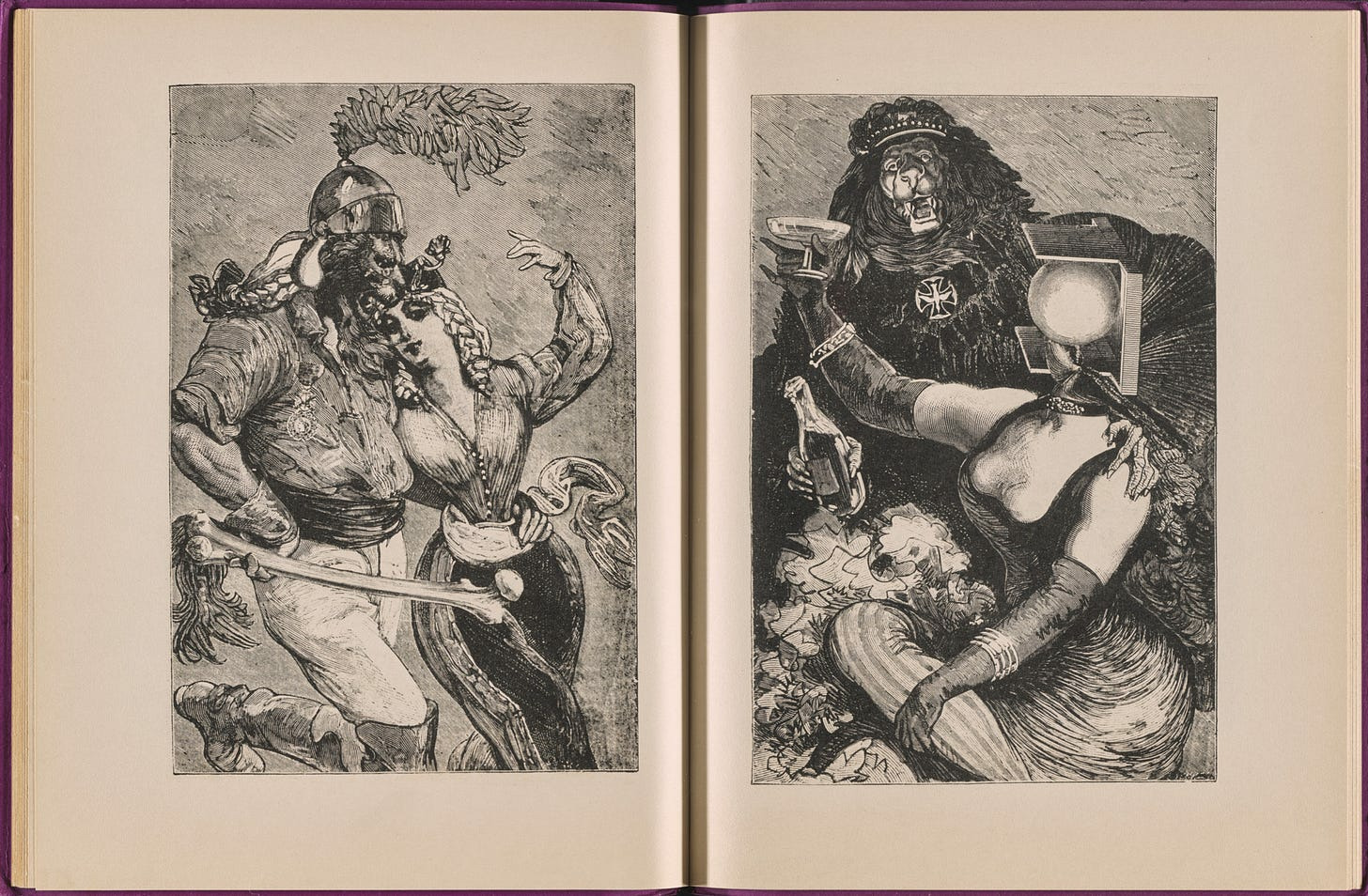
Max Ernst, 1934. Relative to your interests MCP Authorization in practice with Spring AI and OAuth2 – Filling in the missing piece of MCP: security. The Battle For Grounding Your AI Agents Has Begun – Data gravity considerations for AI. We did the math on AI’s energy footprint. Here’s the story you haven’t heard. –…
-
Data Looks Better Naked – Good advice on formatting charts and data tables. The examples are incremental, so you can choose to go all the way, or just apply some of the design changes.
-
Why Skyscrapers Became Glass Boxes – by Brian Potter – ”Ultimately, it was economics (or at least perceived economics) that drove developers to embrace this style. Glass curtain wall buildings were cheaper to erect than their masonry predecessors, and they allowed developers to squeeze more rentable space from the same building footprint. Ornate, detailed exteriors…
-
Greeble
“Greeble” refers to small, intricate details added to the surface of an object—often in visual design, 3D modeling, or special effects—to make it look more complex and visually interesting. The term is especially common in sci-fi and fantasy aesthetics, where greebles are used to give spaceships, buildings, or machinery a more detailed, lived-in appearance. The…
-
Alternatives To Typical Technical Illustrations And Data Visualisations – These look cool, but I had to spend a lot of time figuring them out. Bar charts are boring, but they’re efficient. Still, I want to try some of these.
-
Nick Cooke’s Exentrica – ”it seemed as though it were a bridge between Jugendstil and Art Deco — the missing link, so to speak.”
-
Departure Mono – This font from Tobias Fried, Departure Mono, is amazing. Well, amazing if you remember dot-matrix printers and the screens in the Aliens movie. What’s even more amazing is the website: be sure to scroll and keep scrolling.
-
The beauty of concrete – “ornament survives in the mass-market housebuilder market because the people buying new-build homes at this price point are less likely to be influenced by elite fashions than are the committees that commission government buildings or corporate headquarters. The explanation, in other words, is a matter of what people demand, not…
-
Against optimization – The idea that you need slack in the system intuitively makes sense, but it feels hard to prove ahead of time. The powers that be have to believe that things will go wrong, but they’re usually so focused on things going right (sometimes hubris, sometimes too much trust-by-ignorance) and pre-optimize. // “A…
-
What Factors Explain the Nature of Software – “The only way to know exactly what software we want to build is to fully specify it: without doing so, there will be gaps between our vague ideas and harsh reality. However, a complete, abstract specification is, in general, at least as much work as creating the…
-
Stop Chasing Unicorns – ‘When it comes to ways of working, what do the companies that beat you in deals do better product, design, and engineering-wise?” Silence. “Do they do better discovery and research, ship higher quality work, run more experiments, kill bad decisions faster, retain passionate team members, or have a more effective org…
-
“Designing for Success: UX Principles for Internal Developer Platforms,” Kirsten Schwarzer, KubeCon EU, March, 2024. – – Good tour of applying design-think to platforms. That is, what do designers do on platform engineering teams. Some items: (1) Do at least one hour long user interview a week. This gives you an idea of what your…
-
Sometimes, Lipstick Is Exactly What a Pig Needs! – Abby Bangser, Syntasso & Whitney Lee, VMware – How can you start to take a design/UX-driven approach to building your platform (you know, your pile of Kubernetes stuff to pull it all together for app developers)? Whitney Lee & Abby Bangser have a good mind-model to…
-
The Artists and Cartoonists Who Designed Pee-wee Herman’s World – “I remember feeling giddy most of time we were in production, not from the legendary amount of pot consumed, but from anticipation that we were going to blow people’s minds. We were excited and felt lucky to have an audience for our artwork.”
-
Dark Mode: How Users Think About It and Issues to Avoid – A lot more on dark mode than you thought was possible to write about // “Aesthetic appeal and improved accessibility are the strongest arguments for supporting dark mode.”
-
Fantasy Meets Reality – “If it looks neat, people will want to take a photo with it. If it looks comfortable, people will want to sit on it. If it looks fun, people will play around on it.”
-
Free Lunch – Some strong Amsterdam type vibes here. // “Free Lunch is an all-caps display font that would look comfortable in a butcher shop window. Or a lunch counter menu in 1955. Or printed on the waxed paper that wraps a half-pound of Swiss cheese from your neighborhood deli. A little playful, great for…
-

The problem with t-shirt schwag at tech conferences
Ever wonder why there’s not more t-shirts at tech conferences? Marketing people hate getting t-shirts for booths at conferences. In last week’s Tanzu Talk about platform marketing I went over why: # Er is een fout opgetreden. JavaScript kan niet worden uitgevoerd. Tech conference attendees love t-shirts. They’re also good for brand- and idenity-marketing: if…
You must be logged in to post a comment.