Tag: API
-
Using HATEOAS for agentic AI – a demo
My co-worker Adib did a video showing how to use Spring HATEOAS to make existing REST APIs agent-friendly. Instead of wrapping your 700 APIs as MCP servers and dumping all those tool definitions into the context window, you build a an adapter layer that lets agents discover what they can do by following links in…
-
Ask yourself: which lock-in would an enterprise CFO prefer: Being locked into a CRM that holds 15 years of customer data, process customizations, and institutional context that would take two years and $50 million to migrate? Or, being locked into a foundation model that could be swapped for a competitor by changing an API endpoint?…
-
Feels a little bit like a platform standard so powerful that you need an AI front-end to make it usable by mere mortals.
Yes: Kubernetes started as a way to orchestrate containers, but its true innovation lies in its API model. The declarative resource pattern, with its desired state, actual state and continuous reconciliation, has proven to be a universal abstraction. It works for workloads, infrastructure, policies and more. That universality is why Kubernetes has become the foundation…
-

Everybody talks about digital transformation, but nobody does anything about it.
Recording of my AI platform engineering talk This is a new talk of mine going over how platform engineers can support AI. Well, it’s more about how we don’t exactly know, but we can speculate based on a handful of early use cases. Here’s the slides if you’re into that kind of thing. Here’s the…
-
Atlassian acquires DX, a developer productivity platform, for $1B – That’s a good match, and a quick exit.
-
Anthropic Economic Index report: Uneven geographic and enterprise AI adoption – 🤖: “Enterprise deployment via Anthropic’s API exposes a different facet: businesses adopt AI programmatically to automate. 77% of API usage is automation-dominant, particularly in coding, debugging, office administration, and recruitment. Surprisingly, firms are not especially price-sensitive; higher-cost tasks see higher adoption if they deliver…
-
Top EDI Processes You Should Automate With API – Tech never dies. Helpful consequence: take care of it before it takes care of you.
-

Always talk salary first – working with tech recruiters
Whitney has a LinkedIn problem Our second episode of the Software Defined Interviews reboot is up: Whitney and Coté talk with Sidney Miller about tech recruitment. They talk a lot about the process from both sides: people hiring and people looking for jobs. Plus, some thoughts on working at Neiman Marcus. Find Sidney in LinkedIn.…
-
A Java Language Cumulative Feature Rollup – ‘I found myself asking myself the question, “What’s every new feature Java has introduced since the last time I really cared about new Java language features?”, and didn’t find an easy answer via Google. So, I decided to create that list.’
-
Boomi Dismembers TIBCO Through Acquisitions – “TIBCO’s mistake was cobbling together a bunch of unrelated products and not investing in a cohesive user experience. I’ve called it the ‘TIBCO Frankenstein’ to my clients. TIBCO needed to build a unified user experience across its integration products. But with the sale of Mashery, it appears that ship…
-
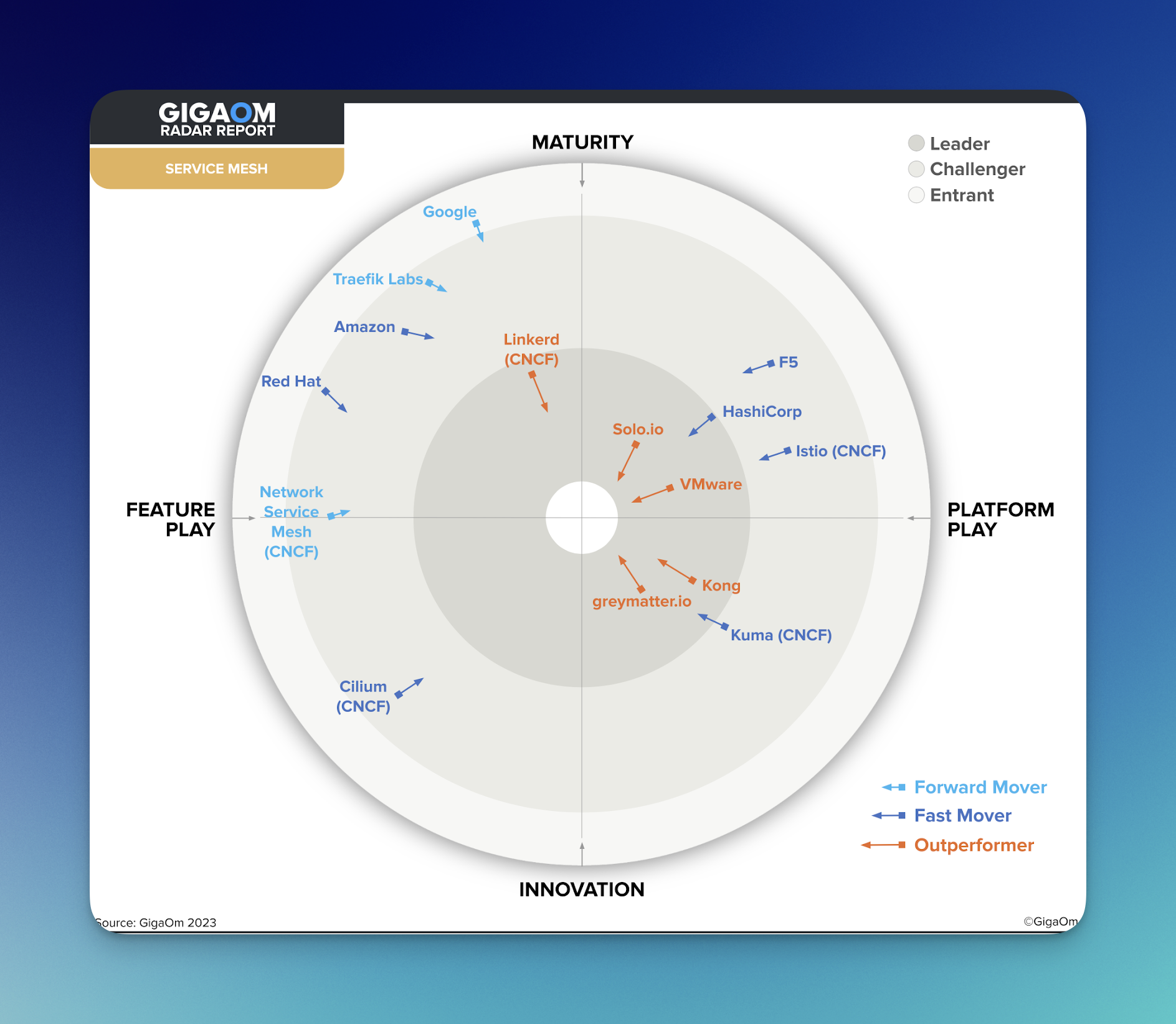
What is a service mesh? Why do you need a service mesh? And which is the best service mesh?
The infrastructure drives the app architecture A cloud native applications is typically designed as a bunch of little components that coordinate with each other over a network. They may use events instead, and while that isn’t the same as point-to-point network communications, it follows the same idea: you have a bunch of indepedent-ish bundles of…
-
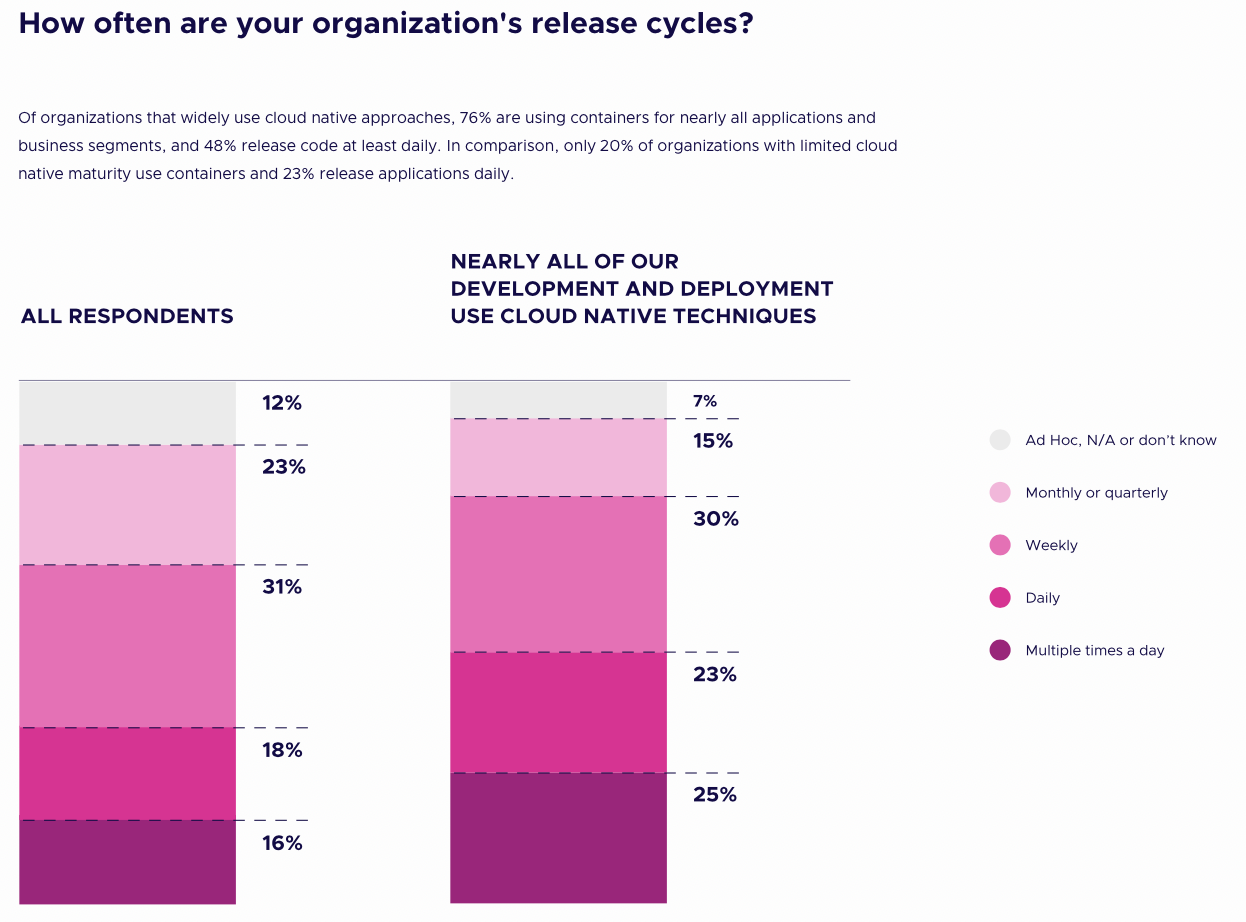
The more kubernetes you use, the more frequently you release software
Notes on the CNCF 2022 survey: the more kubernetes an organization uses, the more frequently it ships. Plus why this survey represents the CNCF community more than everyone.
-

Structure and Control
Do you really like winging it, or do you like more structure? And, of course, the emptying of the waste book and links relevant to your interests. Suggested epigraph: “I don’t care that much.” Suggested theme song: Why Choose by Shopping First, this Platform Engineering Follow-up Thinking I think what I missed in my thinking…
-
How to Have Fun at Executive Dinners, Urgency
I’m in Istanbul for a talk at Java Days Istanbul tomorrow. I’ve been publishing stuff to my old blog a lot at cote.io/notebook, which is fun. Here are two things, one a quick link to a piece I’ve been sitting in for awhile about doing “executive dinners” and then a write-up of the need for…
-
🗂 Link: VMware Modernizes Its Approach to Kubernetes, Increasing Its Appeal to Developers and DevOps
36% of developers cited “resource allocation and management” as their chief impediment to productivity, while 34% cited the “lack of automated collaboration between software developers and IT operations.” Source: VMware Modernizes Its Approach to Kubernetes, Increasing Its Appeal to Developers and DevOps
-
🗂 Link: VMware Tanzu Completes the Modern Applications Picture
help customers build modern applications, run Kubernetes consistently across environments and manage it all from a single point of control. Source: VMware Tanzu Completes the Modern Applications Picture
-
🗂 Link: Introducing VMware Tanzu Mission Control to Bring Order to Cluster Chaos
With VMware Tanzu Mission Control, we are providing customers with a powerful, API driven platform that allows operators to apply policy to individual clusters or groups of clusters, establishing guardrails and freeing developers to work within those boundaries. Source: Introducing VMware Tanzu Mission Control to Bring Order to Cluster Chaos
-
Link: Technical debt leading to a company crisis
The power of focus. Before the crisis, each team worked on its own backlog and specialized in its domain. In the backlog, there were finely decomposed tasks, the team selected several tasks for a sprint. But during the crisis, we worked quite differently. The teams did not have specific tasks, they had a big challenging…
-
Link: In Defense of YAML
“Where it can go wrong is where we use YAML to describe behavior.” Actually doing the thing instead of just describing the thing you want: the bane of all programming. Source: In Defense of YAML

You must be logged in to post a comment.