Tag: Kubernetes
-
Histoires Prodigieuses, Forward Deployed Vibes, and Skyrgamur – Related to your interests, Wednesday
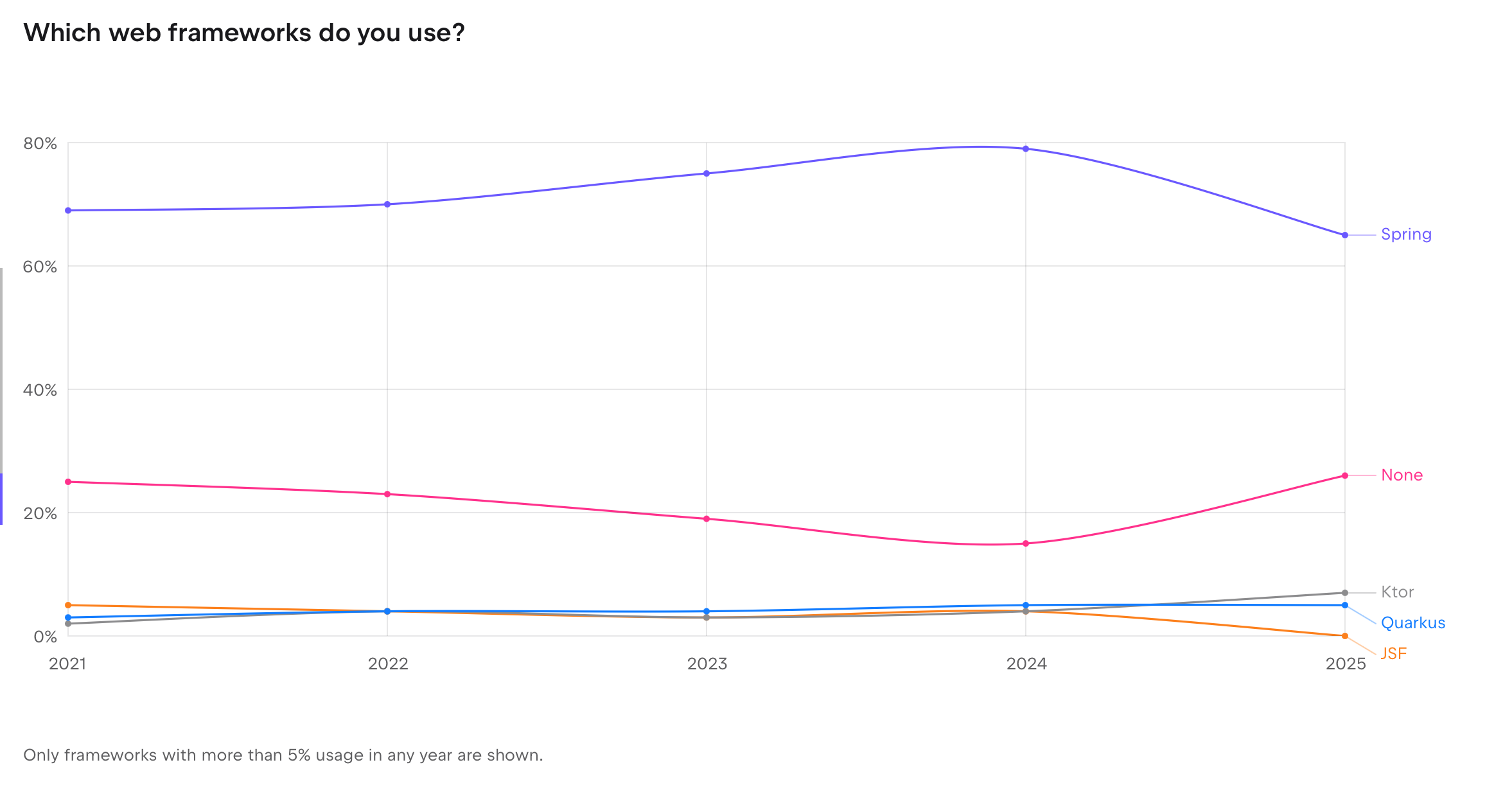
Also: Spring still number one, KubeCon AI workloads, the end of Doctor No, and a buyer’s market for employees. Spring still king, from The State of Java 2025, JetBrains. Related to your interests 🤖 From Red Hat OpenShift to VMware Cloud Foundation 9: A Journey to a Unified Cloud Operating Model – A defense-industry case…
-

KubeCon EU 2026, bottlenecks, Corporate Bullshit Receptivity, and the End of the Meat-Mouse – Related to your interests, Wednesday
Also: sovereign AI, Claude Code auto mode, FCC bans foreign routers, Walmart digital price tags KubeCon EU 2026 KubeCon is crazy big. James says something like 13,500+ people. They’re going for another infrastructure grab: all the stuff used to run AI. It’s worth asking who they’re competing with there. I have no idea how OpenAI…
-

Kubernetes is the bottleneck, and you can get through it with a platform
Photo by Daniel Bryant. Another great KubeCon talk from Abby Bangser imploring the Kubernetes people to remember how important platforms are: they make all of his stuff usable for developers and valuable to the organizations that run it all. Without a platform, you’re just put another bottleneck in place. Also, see the go she started,…
-
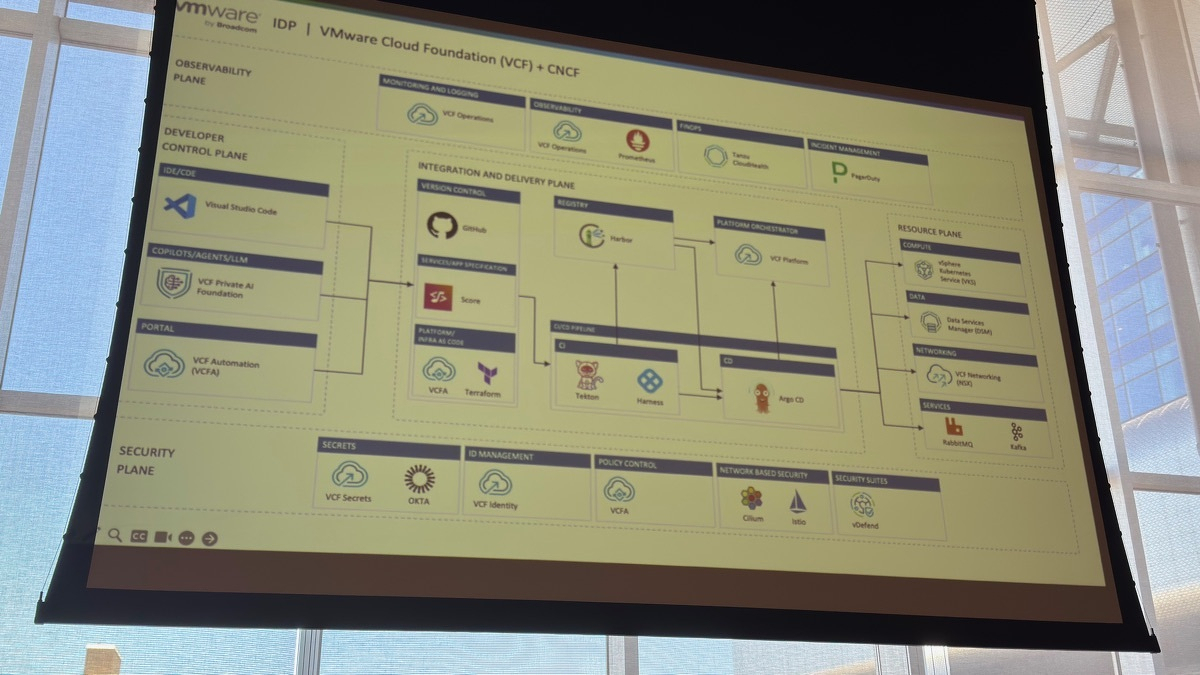
VMware/Broadcom at KubeCon EU 2026
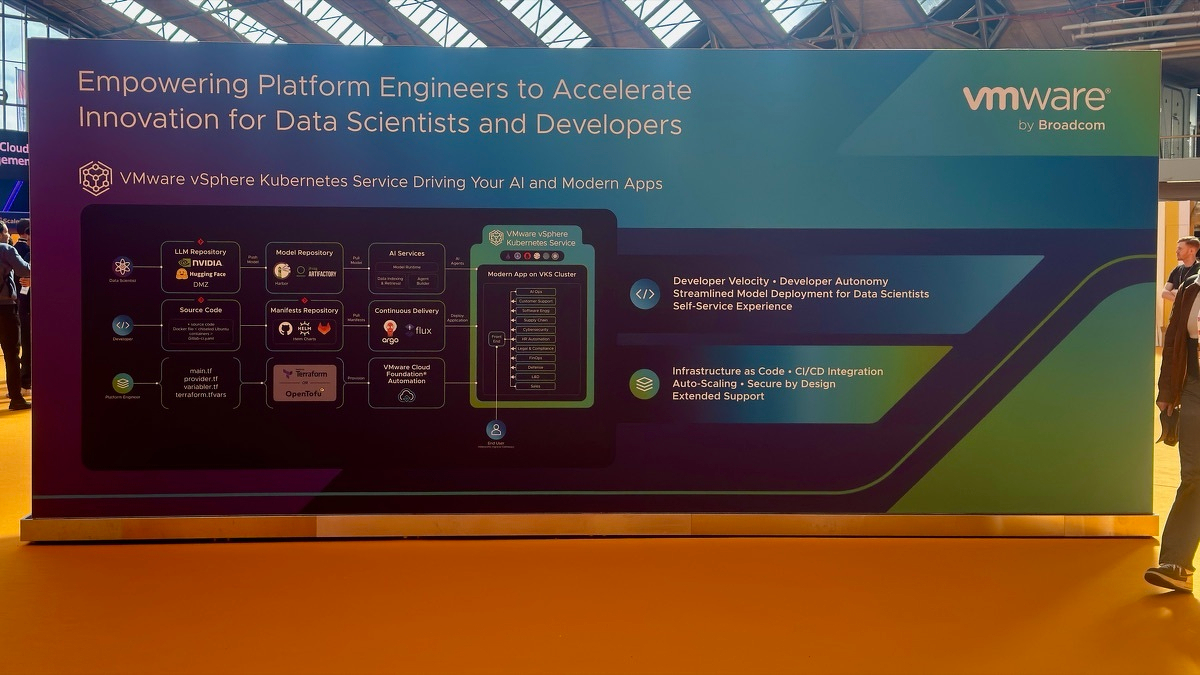
Here’s Claude’s take on VMware’s stuff at KubeCon – just some light editing for me. KubeCon + CloudNativeCon Europe 2026 ran March 23-26 in Amsterdam. Here’s what VMware by Broadcom announced. VKS 3.6 Ships The VKS stack as seen at VMUG Connect Amsterdam 2026. VMware vSphere Kubernetes Service 3.6 shipped with Kubernetes 1.35 support, RHEL…
-
Art Degrees, Sun Microsystems, and How Kubernetes Scales Contributions, with Josh Berkus – Software Defined Interviews #121
Our interview for this week is up, it’s with Josh Berkus: Whitney and Coté discuss with Josh Berkus (Red Hat, Kubernetes contributor) how liberal and fine arts degrees (philosophy, photography, sculpture, pottery) apply to tech careers. Berkus details how early hardware experience influenced his database performance work, noting hardware’s renewed relevance with AI and multi-arch…
-

Related to your interests, Monday
Potsdamer Platz bei Nacht, Paul Paeschke, ca. 1929. Related to your interests Why your DIY Kubernetes stack won’t survive the era of agentic AI How tech chiefs gauge ROI on AI – AI uses: better search, preparing leases, and this: “When the system senses that ice is running low, it fires off an order to…
-
Kubernetes alone does not a platform make
Even the platform engineers need to hide Kubernetes to get their job done: Kubernetes adds another layer of complexity for platform engineering teams, introducing architectural complexities that require a deep understanding of containers, networking, storage, and cluster security protocols. While it has become the default runtime for modern applications, managing Kubernetes at scale alongside existing…
-
Tanzu Catsup: The Risk of Relying on AI for Platform Engineering
Internal development teams and executives are increasingly looking at AI to automate the creation of internal developer platforms. However, cobbling together open-source components with AI is a far cry from building a scalable, secure, and “enterprise-grade” environment. In this conversation, we explore why betting your internal infrastructure on AI-generated platforms is a high-stakes risk and…
-

Relative to your interests, Friday
A Perfect Match for Big Data: VMware vSphere Kubernetes Service and Tanzu Greenplum MCP Auth made easier in Spring – doing auth in MCP has always been a shit-show. The AI Free Lunch is Over – Links to several analyst surveys on enterprise AI. Enterprise Architecture Has Never Been Stronger – Soon, we’ll all be…
-
Relevant to your interests, Friday
A Coxswain on Your Shoulder – AI as executive coach. Primary tip: listen more before you ask questions. Big Blue Poised To Peddle Lots Of On Premises GenAI – Welcome to the last 18 months of labor-intentive services – “Legacy delivery models focused on bums-on-seats aren’t relevant anymore, and services firms must reinvent themselves to…
-
Internal Developer Platforms – Build vs. Buy
From Abby Bangser’s KubeCon US 2025 keynote: Now, I’m sure that at least some of you are shaking your heads and thinking, I’m saying we have to all build our own PaaS. Haven’t we been there before with platforms as a service? But I am absolutely not suggesting that we walk up to Sisyphus, give…
-

Kubernetes use rising, large organizations slowest to adapt, not many people train their own AI model or deploy new AI models frequently
The new CNCF cloud native report shows a continual spread of Kubernetes, and container usage, in organizations. The chart above shows a shift from experimenting with Kubernetes to trying it out in production, to running in production. At the same time, containers, as you’d expect, are also moving steadily into production. Application containers in production…
-
This week’s Tanzu Catsup: AI tools have solved code generation, probably. But they’ve created a new constraint: Day 2 operations. When the volume of applications jumps 10x driven by a flood of “small” line-of-business apps manual “run teams” and traditional onboarding processes break down. Hey guys! Like and subscribe.
-
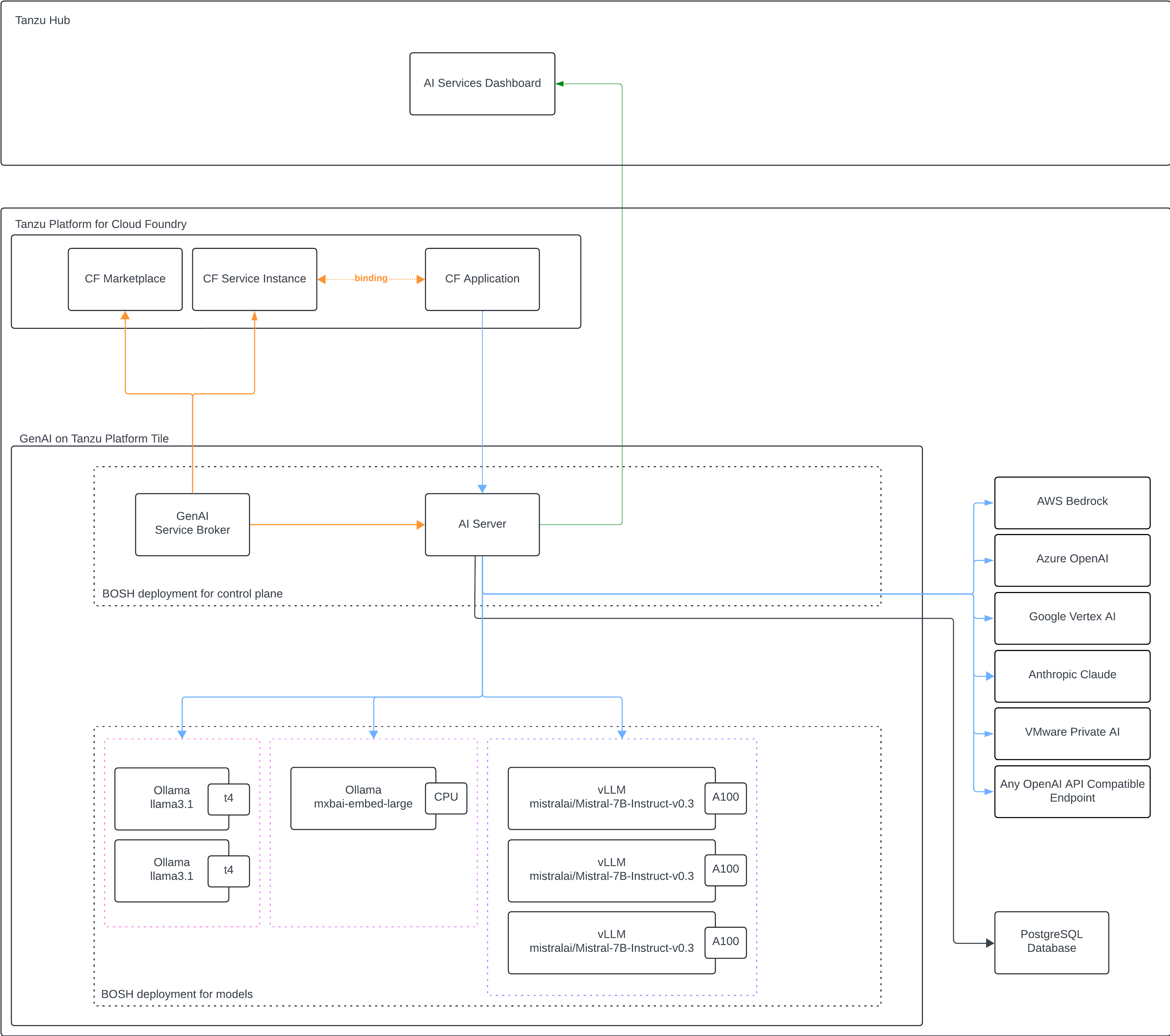
Adding security and governance to Model Context Protocol – How Broadcom uses MCP
Here’s the benefits Broadcom is getting from using MCP (running on Tanzu Platform): This capability allows for seamless task completion, such as linking internal ticketing systems directly through to code commitment, significantly reducing the time required for ticket resolution. Specifically, developers can utilize natural language processing to direct an AI agent to find their next…
-
Relevant to your interests on Monday
Don’t let having an opinion and knowing what you like (being a critic in the classical sense) ruin your enjoyment of everything in life. Yet another cross-platform graphical process/system monitor, bottom. They travel with a knife-sharpener. Smart Tool Selection: Achieving 34-64% Token Savings with Spring AI’s Dynamic Tool Discovery People are often the largest part…
-
Infrastructure self-harm
That wasn’t what we hoped would happen when nearly 10 years ago we and others came up with these new automated technologies around Kubernetes. We thought we would make things easier, more automated, safer, more compliant. And instead, people seem to be getting more and more stuck. And that’s partly because systems have grown. We’re…
-

Vibes, Code, Consequences
A selection from my weblog and elsewhere since last time… Original content Whitney goes to KubeCon – a cross-over episode from SDT: “This week, Whitney Lee joins us to discuss KubeCon news, Coding Assistants, and conference tips. Plus, vegan food and note-taking recommendations.” What is a platform? – Tony and I start a new weekly,…
-
Kubernetes, AI, and platform engineering, build, build, build
AI is here. It’s hungry. It’s expensive. And Kubernetes is the only thing big enough to feed it. … Kubernetes is no longer the platform for apps. It’s becoming the substrate for AI-driven systems. And then you add platform engineering to build a platform around it for self-service access to AI, so long as you…
-
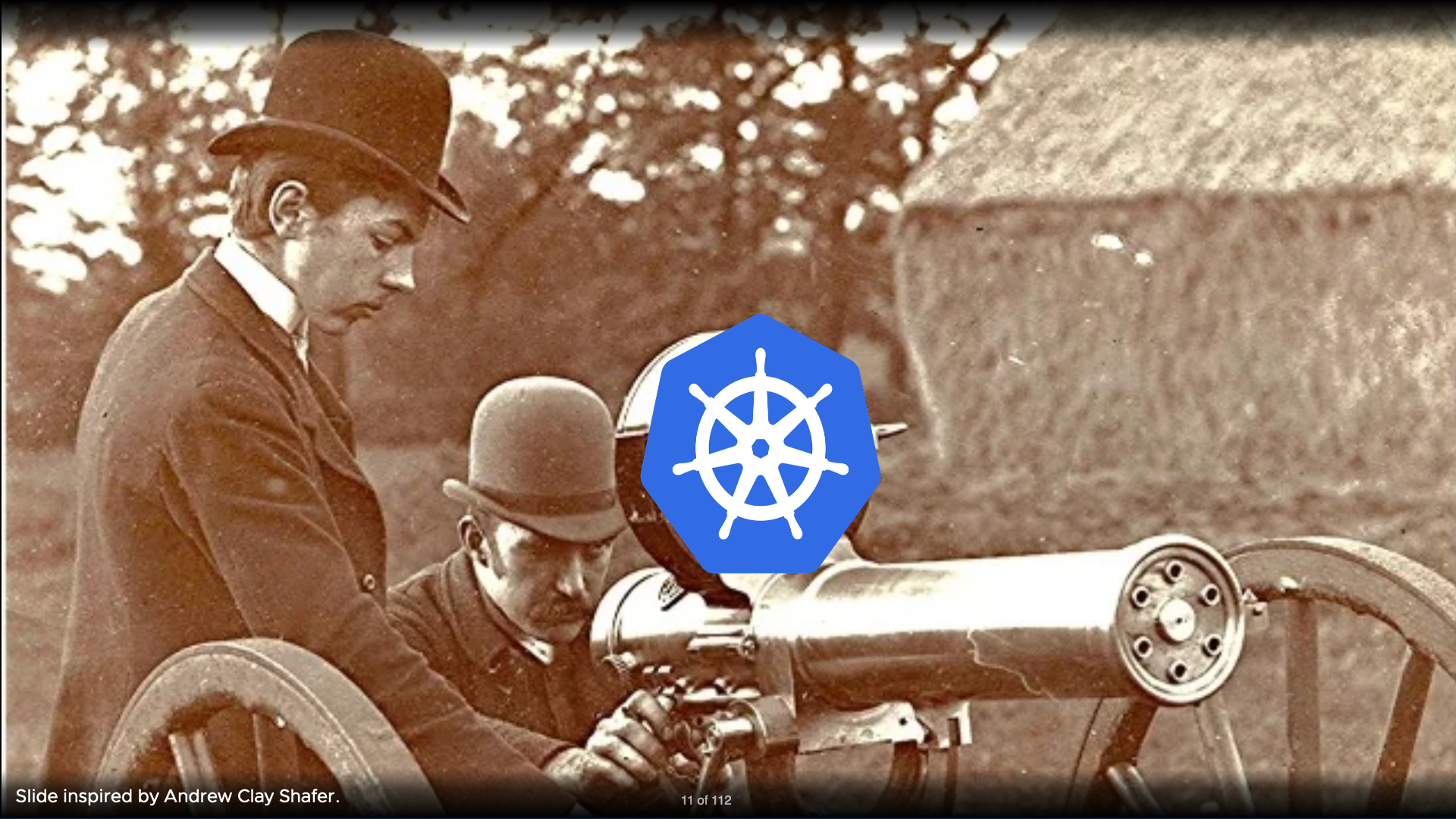
The platform that needs a platform
How big is the Kubernetes market? Here’s an estimate from a recent IDC PDF: The rapid growth of cloud-native applications, driven by DevOps, containers, and microservices, has made container orchestration a critical capability because containers are challenging to manage at scale without an orchestration layer. This trend is driving significant market growth, with IDC forecasting…
You must be logged in to post a comment.