Tag: architecture
-
What Factors Explain the Nature of Software – “The only way to know exactly what software we want to build is to fully specify it: without doing so, there will be gaps between our vague ideas and harsh reality. However, a complete, abstract specification is, in general, at least as much work as creating the…
-
About my studio – Working from home, artist edition. (1) no commute saves time and means booting up into work is faster and frequent: “there is also an advantage to not having a separate studio outside your home. When I did rent a studio in the past it meant that all my artwork in progress…
-
The Ultimate Guide to building Developer Tool Websites – PLG for developers. Get them home pages set-up for the funnel!
-
Do software companies actually have good margins? – ’In other words, software development costs are COGS. Not literally; not according to the accountants. But in practice, if you can only sell SaaS software—and retain customers—by promising a steady stream of new releases, how are the expenses associated with developing those releases functionally any different than…
-
Stop Chasing Unicorns – ‘When it comes to ways of working, what do the companies that beat you in deals do better product, design, and engineering-wise?” Silence. “Do they do better discovery and research, ship higher quality work, run more experiments, kill bad decisions faster, retain passionate team members, or have a more effective org…
-
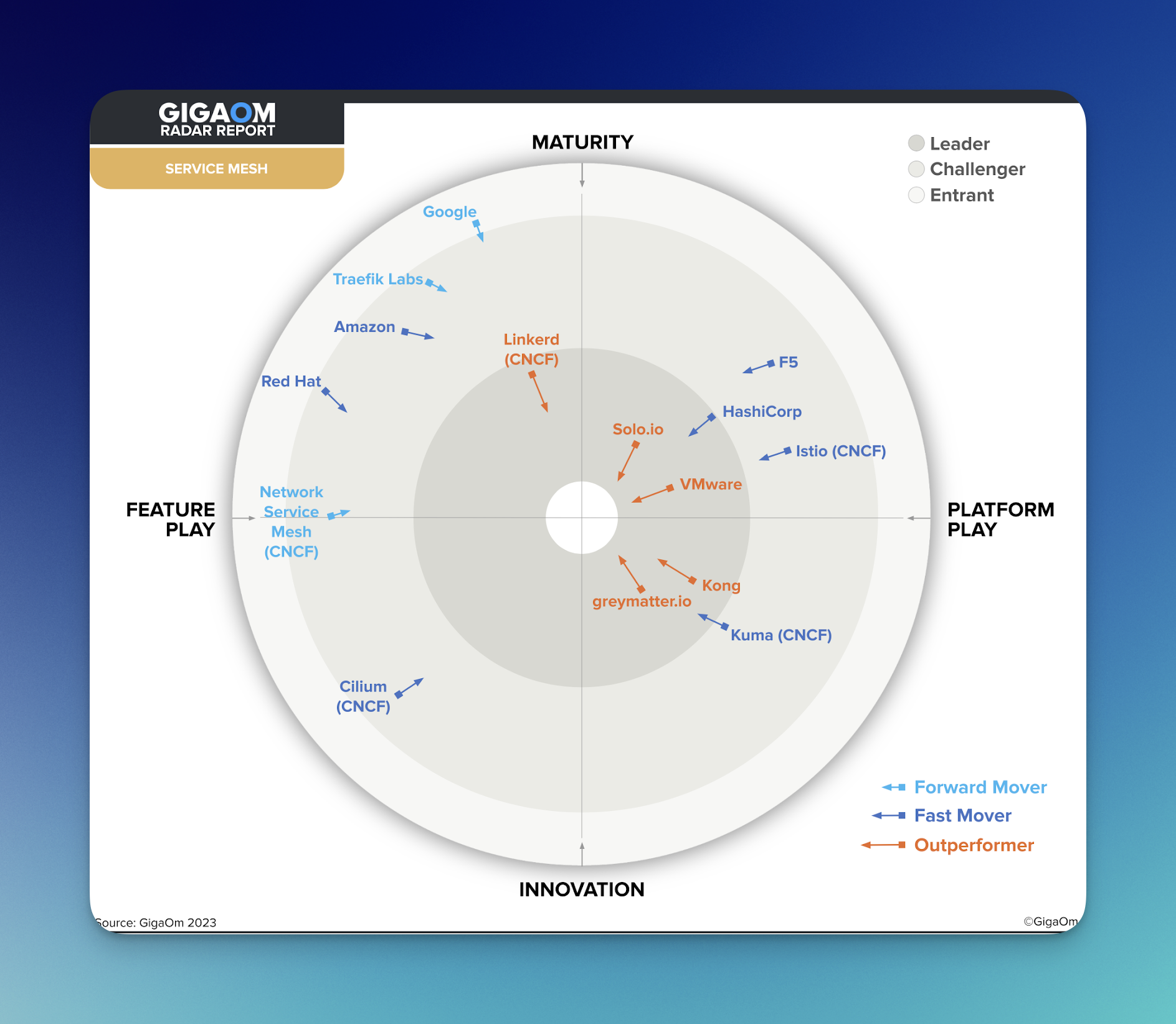
What is a service mesh? Why do you need a service mesh? And which is the best service mesh?
The infrastructure drives the app architecture A cloud native applications is typically designed as a bunch of little components that coordinate with each other over a network. They may use events instead, and while that isn’t the same as point-to-point network communications, it follows the same idea: you have a bunch of indepedent-ish bundles of…
-
The Works of Mars, 1671 – Fortification engineering.
-
Rye Leafoot’s Guide to Elderwood: Aurel’s Reach
At the very heart of the Elderwood, Aurel’s Reach unfurls. Envision the central region of the Elderwood map: this is the Eldergrove, the verdant heart where Aurel’s Reach proudly stands. Its origins remain a mystery to me, yet over countless centuries, it’s blossomed to accommodate a lively 15,000 souls. The city sprawls gracefully alongside a…
-
No one has an “appetite for risk” – “I think there is a better way to express what we aim to express when we say ‘risk appetite.’ What we are talking about is the organization’s failure tolerance. How often is it okay for the organization to experience security failures? How big can the failures be…
-
Monoliths, Microservervices and Mainframes – Reflections on Amazon Prime Video’s Monolith Move – “The supposed development time difference between the two methods is not based on the technology itself, but the context in which you’re deploying it. The argument made by the table is tendentious. It’s based on comparing the worst case for ‘traditional’ application…
-
Start Your Architecture Modernization with Domain-Driven Discovery – For when you’re doing more than just lift and shift. Also, Marc and I wrote up using DDD for app modernization The Legacy Trap.
-
Monoliths vs micro-services, here we go again –
-

🏨📺🥶 Pieter Bruegel’s Discount Motel, Color TV, Cold AC
Generic Plan for a Starting a Platform Team in a Large Enterprise On Friday, I had a discussion with someone just starting to think about how they’d put a platform in place at their very large organization. I have my ever evolving prattle about that, of course. But rather than talk about (only) that, I…
-
🗂 Link: Why would anyone need Cloud Foundry when we have Kubernetes? Um, ‘cos K8s is really hard!
Daimler’s Thomas Müller, platform architect, spoke this morning at the summit about his company’s migration from IBM WebSphere to Pivotal Cloud Foundry (PCF) and illustrated another point, that the typical enterprise has more to worry about than K8s support. His company began its transition from WebSphere in 2015 and it took until March 2019 to…
-
Link: Cloud Foundry Project Eirini Inches the Group Closer to Kubernetes
“A lot of work needs to be done for that but it’s evolving quickly,” Childers said of interoperability tests using Eirini as a bridge between Diego and Kubernetes. He did add that the evolution from Diego to Eirini, if it does occur, will be similar to how Cloud Foundry moved from its DEA architecture system…
-
Link: In Defense of YAML
“Where it can go wrong is where we use YAML to describe behavior.” Actually doing the thing instead of just describing the thing you want: the bane of all programming. Source: In Defense of YAML
-
What do developers need/want to hear?
How to use containers, even managing them. Being more autonomous – developers love freedom. Keeping up to date on skills (see containers). Dealing with or hiding from stupid business culture in their org. Getting permission to try new things. Testing code, automation to avoid legacy traps. More scalable architecture for distributed apps, new types of…
-
🗂 Why Do We Need Architectural Diagrams?
> In practice, most stakeholders are not interested in detailed diagrams, but rather in one or two high-level diagrams which reflect the modularity and boundaries of the system. Beyond these, for a deeper understanding, the code should be the source of truth, which in most of the cases only developers are interested in. www.infoq.com/articles/…
-
🗂 Steeltoe: Modernize .Net Apps for a Microservices Architecture
Microservices for .Net. thenewstack.io/steeltoe-…
You must be logged in to post a comment.